The China Iron and Steel Association (CISA) has signaled that China will step up efforts to regulate competition in its steel sector by tightening output controls and accelerating structural reforms, according to Chinese media reports. The announcement was made during the 2026 Steel High-Quality Development Conference in Beijing.
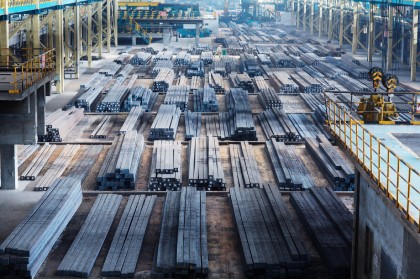
Focus on eliminating inefficient capacity
CISA Vice President Xia Nong emphasized the need to strictly prohibit new capacity additions while facilitating capacity exits and phasing out outdated, inefficient and high-emission facilities. He also called for a science-based long-term governance mechanism to strengthen industry discipline and guide sustainable development.
The strategy aligns with China’s 15th Five-Year Plan (2026–2030), which prioritizes capacity reduction, quality upgrades, and industrial transformation. Key focus areas include improving product quality, enhancing energy and carbon efficiency, and accelerating digital and intelligent manufacturing.
Supply-demand imbalance persists
Despite declining output, structural imbalances remain evident. According to official data, China’s crude steel production fell 4.4 percent year on year to 961 million mt in 2025, while apparent consumption dropped 7.1 percent to 829 million mt. At the same time, finished steel output increased 3.1 percent to 1.45 billion mt, indicating ongoing production pressure.
Officials from the ministry of industry and information technology stressed the need for coordinated action on both supply and demand sides. On the supply side, efforts will focus on controlling new capacity and optimizing production, while demand-side measures aim to expand steel applications and promote higher-value consumption.
A notable shift is underway in China’s steel demand structure. In 2025, the manufacturing sector overtook construction as the largest consumer, accounting for 51 percent of demand, while construction’s share declined to 49 percent from 58 percent in 2020. This transition highlights the growing importance of higher-value industrial applications.
Digitalization and decarbonization trends
Authorities are also promoting digitalization and artificial intelligence to improve efficiency and support structural transformation.
Globally, the World Steel Association noted that while steel demand retains long-term growth potential, decarbonization and regional imbalances will continue to reshape trade flows, with increasing focus on DRI and green steel production pathways.