US-based investment banking company Goldman Sachs Group Inc. expects Chinese steel producers to endure an extended period of weak profitability, amid slower-than-anticipated progress on capacity reduction and persistently high export volumes, according to a Bloomberg report.
The bank has lowered its earnings forecasts for Baoshan Iron & Steel Co. and Maanshan Iron & Steel Co. for the 2026-27 financial years. At the same time, Angang Steel Co. is now expected to post deeper losses over the same period.
Goldman Sachs has also revised down its gross margin assumptions for key products, including rebar and hot rolled coil. The bank said it now anticipates only modest price improvements and holds a less optimistic outlook for the sector than previously.
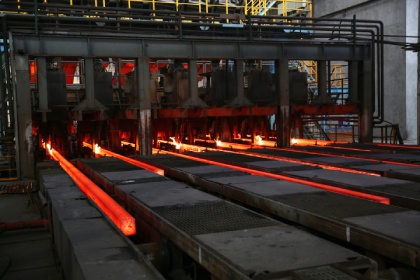
Structural reforms face near-term hurdles
According to Goldman Sachs, near-term challenges to so-called anti-overcapacity, or “anti-involution”, measures include compliance with ultra-low emissions requirements and the reclassification of producers that meet these standards. These factors are slowing the pace of effective capacity cuts, even as policy efforts to address excess capacity remain in place.
Despite these obstacles, the bank indicated that longer-term initiatives aimed at curbing overcapacity are still expected to continue.
Implications for iron ore markets
The more cautious outlook for Chinese steelmakers could also weigh on iron ore market sentiment, Goldman Sachs said, although strong steel export volumes may partially offset weaker domestic fundamentals.
Iron ore prices have been trading within a relatively narrow range of $102-108/mt since late August last year, following a mid-year rally. Meanwhile, inventories at Chinese ports have climbed to their highest level since November 2024, according to data from Shanghai SteelHome E-Commerce Co., adding further pressure to the near-term outlook.