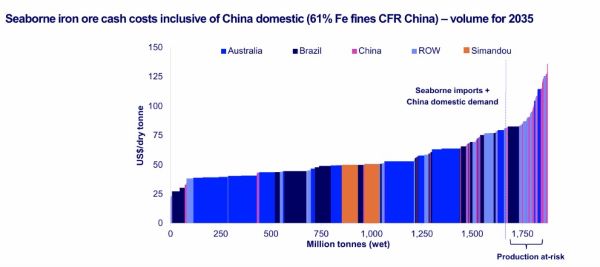
The Simandou iron ore project in Guinea is set to mark a major shift in the global seaborne iron ore market, according to Scotland-based energy research and consultancy company Wood Mackenzie, positioning it as a key driver of long-term supply growth.
The project is expected to begin exports of around 16 million mt in 2026, with volumes increasing over time, although ramp-up may be uneven due to infrastructure and logistical constraints.
Long-delayed project enters execution phase
After more than two decades of delays, Simandou has moved into the execution phase following Guinea’s political reset in 2021. Rather than simply adding new supply, the project is expected to displace higher-cost production, reshaping the global cost curve and reinforcing competition based on quality and cost efficiency.
According to Wood Mackenzie, Simandou will be the single largest contributor to seaborne iron ore supply growth over the next decade. The project is also expected to accelerate the shift toward higher-quality raw materials, strengthening demand for premium-grade iron ore.
Limited short-term impact on Australian producers
For Australian miners, particularly those in the Pilbara region, the short-term impact is expected to remain limited. Their ability to blend lower-grade ores with higher-quality material continues to provide a competitive advantage, though this edge may diminish over time as demand increasingly favors high-grade inputs.
Increased competition for Brazilian suppliers
The competitive impact is expected to be more pronounced for Brazilian producers such as Vale, which operate in the premium high-grade segment.
In response, suppliers may adopt more flexible strategies, including blending and selective sourcing, although rising competition could place pressure on premium pricing.
Africa emerging as key supply region
Simandou is part of a broader wave of iron ore developments across Africa, including projects in Gabon, Congo and Algeria. This trend points to a more geographically diversified and increasingly Africa-centered supply landscape, reshaping global trade flows and intensifying competition.
Decarbonization boosts demand for high-grade ore
Structural changes in steelmaking, including decarbonization, consolidation and the expansion of direct reduced iron production, are reinforcing demand for high-grade, low-impurity iron ore.
These trends are expected to support stronger long-term premiums for quality material, as steelmakers prioritize efficiency and emissions reduction.