A new report from UK-based trade association UK Steel and the Circular Steel Sub-Committee under the association has warned that the UK faces critical scrap shortages as domestic electric arc furnace (EAF) capacity accelerates.
Although the UK generates around 10 million mt of steel scrap each year, more than 80 percent is exported, often returning as imported finished goods that undercut domestic manufacturers.
Export markets typically accept higher-impurity scrap, and overseas processors, often operating with lower costs and more advanced technologies, upgrade UK scrap into high-quality feedstock. Meanwhile, domestic recyclers have had little incentive to invest in modern shredding, screening and refining technologies due to the historically limited domestic EAF market. With the UK steel sector undergoing its largest restructuring in decades, this imbalance represents a significant competitive weakness.
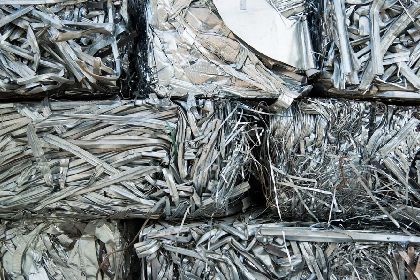
EAF expansion to drive scrap demand to record levels
As steelmakers transition toward EAF-based production, scrap demand is expected to surge. According to the report, scrap consumption could nearly triple by 2050, reaching around 7 million mt per year, with even conservative scenarios pointing to demand of roughly 4.2 million mt. The new EAF capacity at Port Talbot alone will require up to 2 million mt of additional scrap annually from 2027, marking a 70 percent increase in its scrap consumption. Without intervention, the UK will struggle to secure the high-quality scrap needed for this transition.
Scrap streams and safety risks require modernized processing
Current UK scrap availability comes from three main streams: approximately 3 million mt from end-of-life consumer goods, 4 million mt from construction and demolition, and 3 million mt from industrial by-products and obsolete machinery.
Much of this material receives minimal processing and is exported in low-value forms. Yet future EAF operations require rigorously refined scrap, with contamination removed through advanced shearing, shredding, and screening technologies.
It was also highlighted that rising fire and safety risks, particularly from lithium-ion batteries mixed into scrap streams, require new, specialized handling protocols.
To secure EAF-grade scrap supply, the Circular Steel Sub-Committee has proposed an industry-led code of standards that would improve scrap quality and traceability, establish clear specifications for enhanced shredded scrap, HMS grades, screened HMS I/II, rails, plate, borings, and other categories, and lay the groundwork for future mandatory national standards.
Structural barriers limit UK’s scrap-processing potential
However, achieving a thriving domestic scrap market requires coordinated government action. Several systemic constraints, such as insufficient processing capacity, inconsistent quality enforcement, high industrial energy prices, and regulatory gaps, were identified as structural barriers that currently inhibit the UK’s ability to retain value within its own supply chain.
Key policy recommendations to strengthen scrap ecosystem
The UK government was urged to align industrial, fiscal, energy, and environmental policy in order to support a competitive circular steel economy. Recommendations include:
- strategic investment in domestic scrap processing infrastructure, especially at EAF sites such as Port Talbot.
- improved rail, water, and power connectivity, plus strengthened fire-prevention systems.
- R&D support for advanced recycling technologies.
- reducing industrial energy costs via the British Industrial Competitiveness Scheme.
- introducing national EAF-grade scrap standards.
- unified licensing for high-volume recyclers with risk-based inspections.
- stronger quality assurance and standardized procedures for handling non-conforming materials, including batteries.
- tightening controls on storage and export to ensure all exported scrap comes from fully permitted sites.
Implementation roadmap: 2025-2030 phased reforms
The report outlined a multi-year plan to reform the UK scrap ecosystem:
- by end of 2026: adoption of the voluntary code of standards, reforms to waste-handling exemptions, and initial economic support measures.
- by end of 2027: transition from voluntary to mandatory national standards and expansion of domestic EAF-grade scrap supply.
- by end of 2028: deployment of digital traceability systems across scrap flows and a nationwide review of policy effectiveness.
Ultimately, strengthening the domestic scrap-processing ecosystem is essential to deliver low-carbon EAF-based steelmaking. Retaining and upgrading scrap within the UK, rather than exporting it, will secure feedstock for new EAF capacity, protect industrial jobs, enhance economic value, and position the UK as a leader in circular, low-emission steel production.