US President Donald Trump announced on February 3 that India and the United States have reached an agreement on a new trade deal following a phone conversation with Indian Prime Minister Narendra Modi. However, no official joint statement or detailed documentation has yet been released by either government, leaving major elements of the proposed agreement unclear.
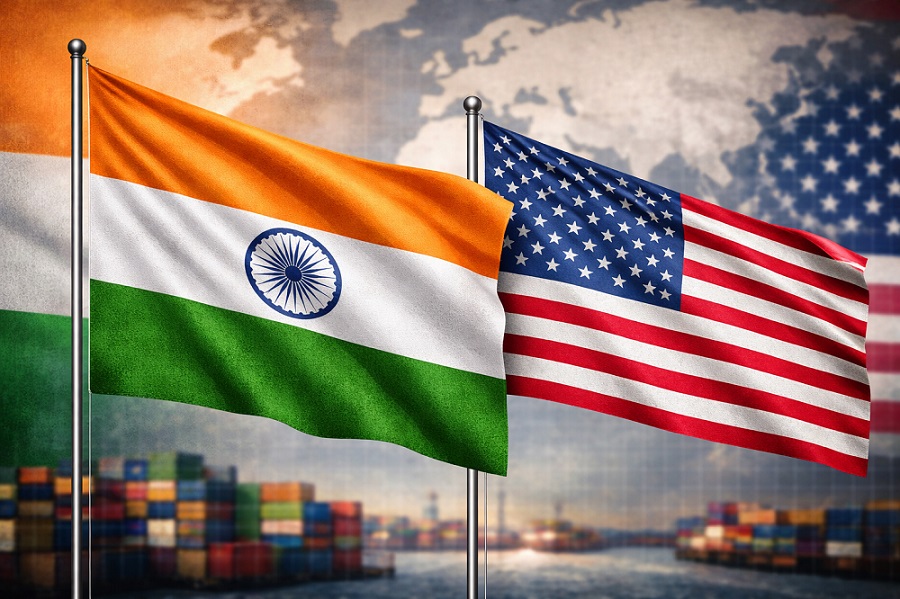
According to preliminary information circulating after Trump’s social media post, India is expected to remove tariffs and non-tariff barriers on US goods, while US tariffs on Indian exports may be reduced to 18 percent from the earlier 25 percent level. These details, however, have not been formally confirmed by the Indian government.
In his response on social media, Modi welcomed the announcement, stating, “Made in India products will now have a reduced tariff of 18 percent,” and thanking Trump on behalf of India’s 1.4 billion citizens. Despite these public statements, both sides have so far refrained from publishing the scope, structure or legal framework of the agreement.
Trade deal context - tariffs, Russian oil issue and earlier tensions
The development comes after a period of heightened trade friction. In August 2025, the US raised import duties on Indian goods from 25 percent to 50 percent, citing India’s continued purchase of discounted Russian crude oil as indirectly supporting Moscow’s war effort in Ukraine. India subsequently became one of the countries facing the highest US tariff levels.
Notably, Trump had earlier linked any potential trade deal with India to reduced imports of Russian oil, but the recent announcement did not address this issue.
Experts urge caution over premature optimism
Trade experts have warned against interpreting the announcement as a finalized trade agreement. Ajay Srivastava of the Delhi-based Global Trade and Research Initiative (GTRI) noted that several critical questions remain unanswered.
“What products are covered, what the timelines are, and whether India has really agreed to zero tariffs and zero non-tariff barriers, especially in sensitive areas like agriculture and regulated imports, is still unclear,” Srivastava said.
He also questioned Trump’s claim that India had committed to “Buy American” and to purchase over $500 billion worth of US energy, technology and agricultural goods, noting that India’s current annual imports from the US are below $50 billion.
“Until there is a joint statement, negotiated text, and clarity on enforceability, this should be treated as a political signal rather than a concluded trade deal. Caution, not celebration, is warranted,” Srivastava added.