The Industrial Accelerator Act has officially recognized the steel sector as a strategic industry within the European Union. However, the German Steel Federation (WV Stahl) argues that the proposal still lacks binding mechanisms to safeguard steel production within the EU.
According to the European Commission’s draft legislation, a quota requiring 25 percent low-emission steel will be introduced in public procurement projects starting January 1, 2029. The requirement will apply to public works, infrastructure and transport projects, as well as certain public funding schemes.
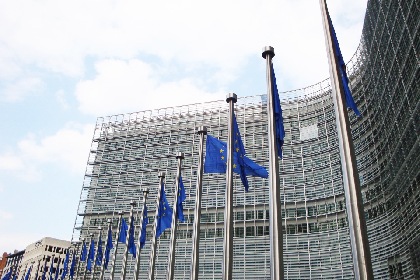
Imported steel could qualify under quota
WV Stahl noted that, unlike quotas in other sectors that include “Made in Europe” requirements, the steel provision currently applies only to sustainability criteria and not to production origin. As a result, low-emission steel imported from third countries could potentially meet the same quota requirements as steel produced within the European Union.
The association emphasized that the proposal does not establish minimum quotas for EU-produced steel or define value-creation requirements specifying how much production and processing must take place within the EU.
Federation says proposal weakens investment security
Kerstin Maria Rippel, CEO of WV Stahl, welcomed the recognition of steel as a strategic sector. However, she criticized the current draft as insufficient.
According to Rippel, the legislation imposes ambitious climate obligations on European producers without providing equivalent industrial policy safeguards to protect domestic production during the transition toward climate neutrality. The federation warned that this imbalance could undermine investment security for European steelmakers and weaken the EU’s industrial base at a time when resilient supply chains and industrial capacity are becoming increasingly important for economic and geopolitical security.
Demand incentives and steel labeling still unclear
While the Act may generate additional demand for low-emission steel, WV Stahl argues that it does not guarantee structural demand for steel produced within the EU.
The federation also highlighted the absence of a concrete framework for a voluntary steel label. Instead, the European Commission refers to ongoing work under the Ecodesign for Sustainable Products Regulation and the Construction Products Regulation, suggesting that the classification of low-carbon steel could be defined later through delegated legislation.
Industry calls for stronger “Made in Europe” requirements
WV Stahl further argued that demand incentives introduced through the Industrial Accelerator Act should be expanded to additional steel-consuming sectors such as construction, infrastructure and energy. The federation also called for the introduction of clear “Made in Europe” requirements similar to those proposed in the EU’s automotive policy package.
According to Rippel, low-emission steel will be essential both for meeting EU climate objectives and for supporting strategic sectors such as defense, while she stressed that strengthening domestic production capacity will be critical if Europe intends to achieve both industrial resilience and climate goals.