According to Global Energy Monitor’s (GEM) sixth annual report on the steel sector, continued investments in coal-based steelmaking are threatening the global industry’s transition toward lower-emission production routes.
The report stated that large-scale investments in blast furnace projects and relining activities continue to outweigh planned retirements of older coal-based facilities.
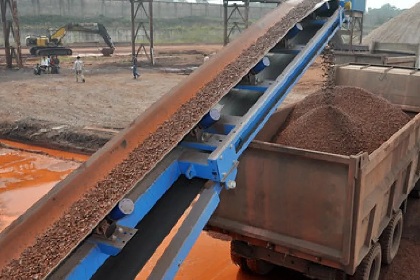
Coal-based blast furnace capacity continues to expand
GEM reported that 319 million mt per year of coal-based blast furnace capacity has either been announced or is currently under construction globally, representing a five percent increase compared to the previous year. In addition, approximately 80 million mt of blast furnace capacity is tied to relining projects designed to extend the operational life of existing facilities.
The report noted that announced retirements cover only 141 million mt of currently operating blast furnace capacity. As a result, global blast furnace capacity is projected to record a net increase of 88 million mt by 2035, highlighting the continued dominance of coal-intensive steelmaking technologies.
Steel industry remains major emissions source
According to GEM, around 88 percent of steel sector emissions originate from coal-based production routes. The steel industry itself accounts for approximately 11 percent of global carbon emissions, underlining the sector’s importance in global decarbonization efforts.
Progress in low-emission technologies remains slow
The report indicated that adoption of greener steelmaking technologies remains limited. The share of electric arc furnace (EAF)-based steelmaking increased by only one percentage point over the past year, rising from 33 percent to 34 percent of global operating capacity.
In ironmaking, GEM stated that only 10 percent of global capacity currently uses direct reduced iron (DRI) technology instead of coal-based blast furnace production. Furthermore, only two percent of global DRI capacity, equivalent to approximately four million mt per year, uses green hydrogen as the primary reducing agent in line with net-zero pathways.
India and China dominate planned coal-based capacity
Astrid Grigsby-Schulte, project manager of the Global Iron and Steel Tracker at GEM, stated that the steel industry’s decarbonization outlook remains weak. She emphasized that India and China together account for 86 percent of planned new coal-based steelmaking capacity worldwide.
India alone represents more than 60 percent of planned global coal-based blast furnace capacity, while 93 percent of its ironmaking projects under development are based on coal-intensive technologies.
According to the report, China remains the second-largest developer of new blast furnace capacity globally. GEM added that approximately 94 percent of China’s existing blast furnace capacity currently has no announced retirement plans, reinforcing concerns about the long-term pace of decarbonization in the global steel sector.