On October 7, the European Commission revealed the highly anticipated replacement of the current safeguard system for the European steel industry, in which the free-of-duty tariff quotas are reduced by leveraging 2013 levels as a benchmark and the tariffs after exhaustion are raised to 50 percent, in line with global tariff levels. As previously reported by SteelOrbis, the proposal also includes the “melt and pour” rule, discussed in length since its introduction in the “Steel and Metals Action Plan”, where imports will be subject to verification of origin. In the last two days, European steel producers have welcomed the new framework, while some other parties have expressed their dissatisfaction or outright rejection.
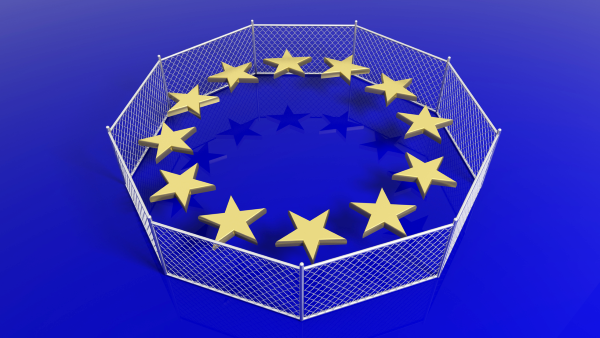
EU steel industry backs EC’s new protection measures
The German Steel Federation (WV Stahl) has stated that the new framework is an important step in ensuring fair competition in EU steel trade. “The planned tariff quota system is balanced and creates the urgently needed basis for fair competition. The EU is thus strengthening domestic steel production and removing key hurdles to investments in decarbonization,” said Gunnar Groebler, president of the German Steel Federation. According to Groubler, the new mechanism will not isolate the European market, but it will protect domestic steel production without unnecessarily burdening the manufacturing industry.
Spanish steelmakers association UNESID also welcomed the change, stating that the measure responds to a “long-standing demand from the sector, which has been warning of the impact of global overcapacity and unfair imports on industrial viability, employment, and sustainability”. Carola Hermoso, UNESID’s director general, stated, "The Commission's proposal is ambitious and much-needed. It reestablishes a framework for fair competition, boosts the utilization of production capacity, and provides stability and confidence for investments. This is essential to ensuring the future of European steel and the thousands of jobs that depend on it".
In addition, German metalworkers’ union IG Metall noted that, while the new framework is in the right direction, it should be implemented by January 2026 at the latest and be supported by growth stimuli and investment incentives to combat the problem of overcapacity. Jürgen Kerner, vice chairman of IG Metall, said that the “trade policy alone is no guarantee for the survival of the European steel industry and the jobs it creates”, highlighting the need for additional backing from green steel production and competitive energy costs.
Two EU-based stainless steel producers, namely Aperam and Outokumpu, applauded the European Commission’s proposal. Tim di Maulo, CEO of Aperam, stated that the new plan is essential for “leveling the playing field” and called for its swift implementation. Outokumpu, on the other hand, noted that the new quota tonnage will better reflect the current market conditions and that a review mechanism must be built into the system to assess its effectiveness based on market data and to enable corrective action where necessary.
Steel users and non-EU countries raise concerns
Even though European steelmakers have expressed their commitment to the European Commission’s new framework, end-users and other countries have directed some criticism towards it, citing limited access to import products that are not readily available in Europe and a decrease in exports to the EU, respectively. Italian distributors association Assofermet stated that the new safeguard framework is a “steel trap” for distributors and manufacturers, while South Korea is expected to enter bilateral consultations with the EC to protect the supply chain in light of the changes.
The European Automobile Manufacturers’ Association (ACEA) noted that the dramatic lowering of quotas and the doubling of the out-of-quota tariff to 50 percent will significantly reduce the possibility to relieve pressure in the European market through imports. According to ACEA, the “melt and pour” principle will restrict imports further and may bring about an inflationary impact. Sigrid de Vries, ACEA’s director general, acknowledged the need for such measures for the steel sector, but emphasized that the new rules might be too heavy for steel users to carry.
UK-based trade association UK Steel described the proposed system as “devastating” as UK-based steelmakers’ export tonnage to the EU, their most important market, could be heavily curtailed. According to UK Steel, the EU market is the destination for 78 percent of all UK steel exports, which totaled 1.9 million mt in 2024. In this regard, UK Steel has called on the British government to respond to the new framework by either negotiating preferential treatment or tightening its own quota system. “This is perhaps the biggest crisis the UK steel industry has ever faced. The government must go all out to leverage our trading relationship with the European Union to secure UK country quotas or potentially face disaster,” stated Gareth Stace, director-general of UK Steel.