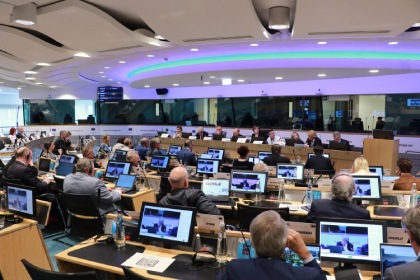
A cross-sector debate hosted by the European Economic and Social Committee Employers’ Group has raised concerns that the EU’s proposed Industrial Accelerator Act (IAA) may fall short of its objectives without significant revisions.
Participants included the European Steel Association (EUROFER), Cement Europe, European Automobile Manufacturers’ Association, and European Aluminum.
Lack of clarity creates uncertainty
A key concern is the absence of clear definitions for critical concepts such as “low-carbon materials” and “Made in Europe.” Industry representatives warned that without harmonized definitions, companies face uncertainty in compliance and investment decisions, particularly in capital-intensive sectors like steel and cement.
Stakeholders highlighted the risk of excessive administrative burden, noting that complex reporting, certification, and compliance requirements could turn the IAA into a bureaucratic framework rather than a practical demand-driving tool. This could delay investment decisions and slow the pace of industrial decarbonization.
One-size-fits-all approach questioned
Participants also criticized the IAA’s horizontal design, arguing that it fails to reflect sector-specific realities. Industries differ significantly in cost structures, exposure to global competition, and reliance on public procurement, raising doubts about the effectiveness of a uniform policy approach.
A major weakness identified is the lack of focus on underlying structural issues, particularly high energy costs. Industry representatives stressed that demand-side measures alone are insufficient to restore competitiveness without addressing core cost drivers.
Global competition intensifies pressure
The EU’s approach was contrasted with more coordinated industrial strategies in competing regions, which combine subsidies, local content rules, and streamlined regulation. In comparison, the EU framework was described as fragmented, potentially weakening its global competitiveness.
Concerns were also raised over governance, including the complexity of implementation, limited coordination among member states, and heavy reliance on delegated acts. These factors reduce predictability and create additional legal uncertainty.
Risk of limited real-world impact
Overall, stakeholders warned that the IAA may fail to create clear market signals or guarantee demand for low-carbon products produced within the EU. Without stronger alignment with energy and industrial policy, the framework risks remaining symbolic rather than transformative.
Industry participants concluded that the IAA requires significant adjustments, including clearer definitions, simplified procedures, and a more integrated policy approach. Such changes are seen as essential to ensure the act can effectively support both industrial competitiveness and the transition to a low-carbon economy.