EU leaders have agreed on a comprehensive “One Europe, One Market” agenda at the March 2026 European Council, setting out concrete measures aimed at strengthening competitiveness, resilience and strategic autonomy across the bloc.
The agenda will be implemented largely during 2026 and by the end of 2027 at the latest, focusing on five priority areas: deepening the single market, simplifying regulation, ensuring affordable energy, supporting industrial renewal and innovation, and mobilizing investment.
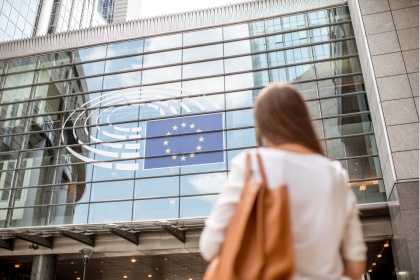
Single market integration and regulatory simplification
A central pillar of the strategy is strengthening the EU single market to allow companies to operate more efficiently across borders. Key initiatives include the creation of a new “EU Inc.” legal framework to simplify cross-border business operations, improved recognition of professional qualifications, and the introduction of a European Business Wallet to reduce administrative burdens through a “once-only” principle.
EU leaders also emphasized the need to simplify regulations by reducing administrative burdens, advancing omnibus simplification packages and reviewing existing legislation to eliminate overlaps and outdated rules.
Energy policy at the core of competitiveness agenda
Energy costs were identified as a critical factor affecting industrial competitiveness, particularly amid ongoing geopolitical tensions and price volatility.
The agenda includes both short-term and long-term measures. In the near term, the EU will consider targeted interventions to reduce electricity costs and review the EU Emissions Trading System by July 2026.
In the longer term, the strategy focuses on accelerating electrification, strengthening grid infrastructure and interconnections, and advancing the Energy Union to reduce dependence on fossil fuels and stabilize prices.
Industrial strategy and investment mobilization
The agenda also aims to strengthen Europe’s industrial base and reduce strategic dependencies. Measures include mapping critical dependencies by the end of 2026, introducing European preference mechanisms under the Industrial Accelerator Act, and addressing unfair global competition.
In parallel, the EU plans to mobilize investment through deeper capital markets integration, progress on the savings and investment union, and potential introduction of a digital euro. Completing the banking union remains a priority to improve access to financing.
EUROFER warns on energy price challenges
The European Steel Association (EUROFER) has welcomed the recognition of affordable energy as a key priority for competitiveness and decarbonization but cautioned that effective implementation will be critical.
According to the association, the current framework lacks a comprehensive assessment of electricity market design, particularly the role of fossil fuels in setting power prices. EUROFER warned that, without structural reforms, the EU may struggle to shield industry from ongoing price volatility and achieve meaningful decoupling of electricity prices from fossil fuel costs.
The association emphasized that electricity prices of around €50/MWh are essential for energy-intensive industries such as steel to remain globally competitive while advancing the energy transition.