EU climate and trade policies are set to reshape the European steel market in the coming years, affecting production costs, steel prices and competitiveness across the entire value chain. These were among the key issues discussed at the conference “ETS and CBAM: What are the implications for raw materials and steel?”, organized by siderweb in cooperation with RICREA, Italy's national consortium for the recycling and recovery of steel packaging, on November 5 during Ecomondo 2026 in Rimini, Italy.
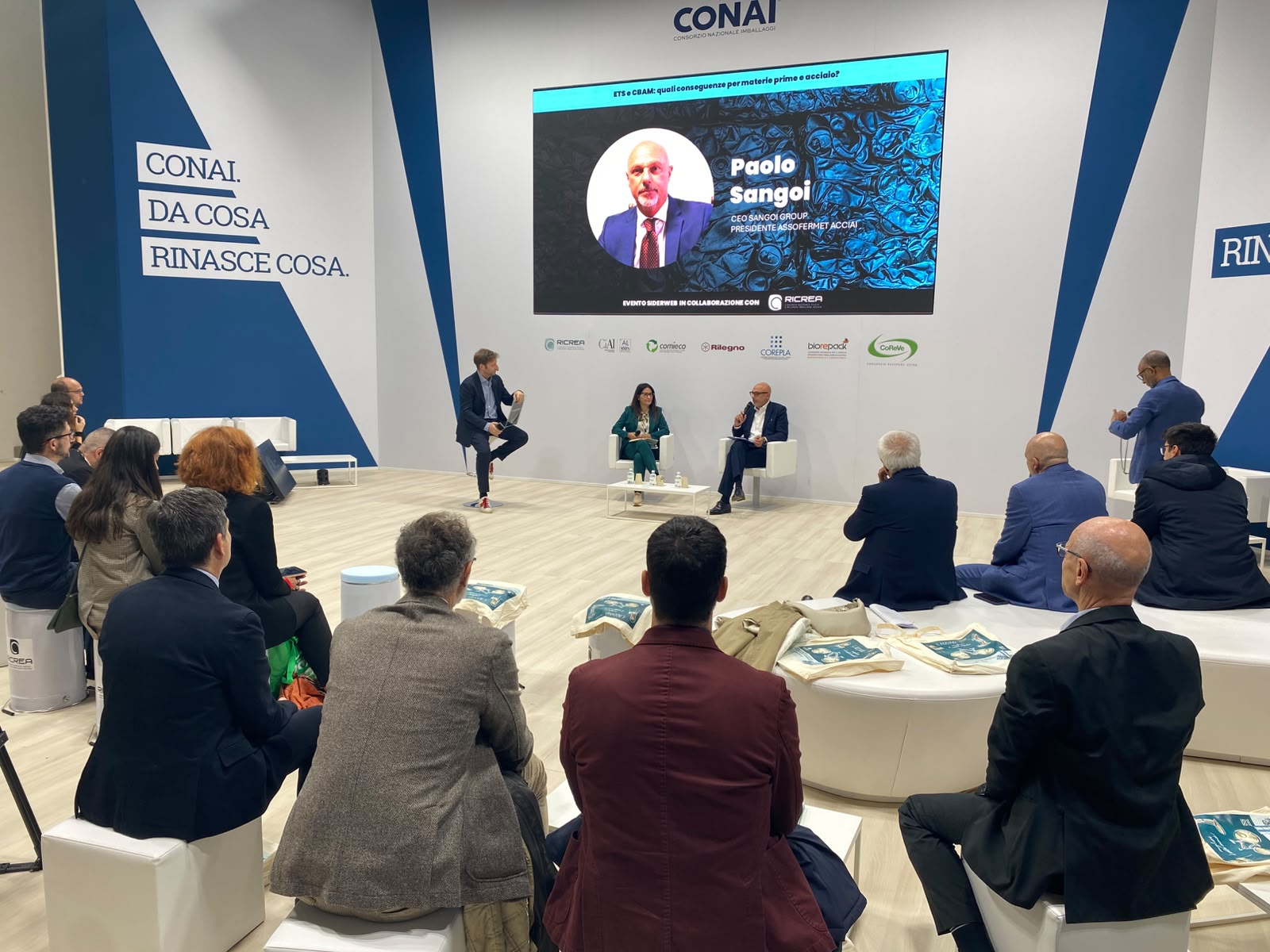
The discussion focused on the definitive phase of the Carbon Border Adjustment Mechanism (CBAM), which began on January 1, 2026, and the gradual phase-out of free allowances under the EU Emissions Trading System (EU ETS), scheduled to continue until 2034. The two mechanisms are designed to encourage industrial decarbonization while limiting the risk of carbon leakage to countries with less stringent environmental regulations.
Tighter import measures could support EU steel producers
Alongside rising carbon costs, the EU is strengthening trade measures aimed at protecting domestic steel production. According to the regulatory framework outlined during the conference, the new tariff-rate quota system provides for a reduction of approximately 47 percent in import quota volumes compared to the previous safeguard system, while the out-of-quota duty is set to increase from 25 percent to 50 percent. The measures also include the melt and pour requirement, under which importers must identify and certify the country where the steel was originally melted and poured, strengthening traceability obligations.
According to Stefano Ferrari, head of siderweb's research department, these measures could reduce competitive pressure from imports, potentially supporting EU steel prices, producers' margins and capacity utilization rates, provided that demand remains sufficiently strong. However, any potential benefits will have to be weighed against higher energy costs, rising carbon-related expenses and the significant investments required to adopt low-emission steelmaking technologies.
Distributors and downstream manufacturers face competitiveness risks
The impact of higher steel costs could be particularly significant for downstream segments of the European steel industry. Distributors, steel service centers and manufacturers using steel as a raw material may face increasing costs, weakening their competitiveness against non-EU competitors. During the panel discussion, Paolo Sangoi, CEO of Sangoi Group and president of Assofermet Acciai, highlighted growing concerns among steel distributors, who may be forced to pass additional costs related to the new measures on to their customers. A key issue is whether end-users will be able to absorb these increases, particularly if imported finished goods from third countries are not subject to equivalent requirements. Sangoi therefore called for EU policies aimed at supporting industrial consumption and production, warning that higher costs could further accelerate the relocation of manufacturing activities outside Europe.
Low-emission steel demand remains a key challenge
Another major development is the growing differentiation between conventional and low-emission steel, with increasing attention being paid to carbon footprints, product origin and traceability. However, the economic viability of investments in low-emission steelmaking will depend largely on whether sufficient demand emerges from buyers willing to pay a premium for lower-carbon steel products.
From the steel producers' perspective, Isabella Manfredi, chief sustainability officer at Feralpi Group and president of Sustainability Makers, stressed that decarbonization efforts are continuing despite the revision of certain EU regulatory requirements. Market demand for sustainability-related information and greater transparency across supply chains continues to grow, making reliable and verifiable emissions data increasingly important for steel producers.
Scrap availability and recycling remain strategic priorities
The conference also highlighted the strategic importance of ferrous scrap for the European steel industry, particularly as electric arc furnace (EAF) steelmaking plays an increasingly important role in decarbonization. Domenico Rinaldini, president of RICREA, pointed out that Italy already imports approximately 7-8 million metric tons of scrap annually to meet the requirements of its domestic steel industry. Maintaining domestic scrap collection volumes and strengthening recycling activities are therefore essential both to secure raw material availability and to support the sector's decarbonization targets. Rinaldini also referred to the EU Packaging and Packaging Waste Regulation (PPWR), which is expected to bring changes to the existing packaging management and extended producer responsibility systems.
EU steel transition hinges on industrial demand and cost competitiveness
The discussions at Ecomondo highlighted that the future of the European steel industry will depend on striking a balance between environmental objectives and economic sustainability. The effectiveness of the EU ETS, CBAM and tighter import measures will depend not only on their ability to protect domestic steel production and reduce emissions, but also on access to competitively priced energy, investment in new technologies and, above all, sustained industrial demand. The main challenge will be to advance the transition toward lower-emission steelmaking while preserving the competitiveness of European steel producers, distributors and downstream manufacturers.