The month-long trend of leaps and bounds in import wire rod pricing has finally run out of steam, as US buyers are reluctant to pay such high prices-especially at levels that overshoot domestic offers.
Although Turkish mills increased their wire rod prices to reflect soaring scrap hikes, demand for wire rod in the US has failed to support the offers and there is speculation that the Turkish prices will come down in the near future. For now, however, offers have stabilized from last week, and remain in the range of $33.00 cwt. to $34.00 cwt. ($728/mt to $750/mt or $660/nt to $680/nt) duty paid, FOB loaded truck in US Gulf ports.
Compared to Turkish offers, Chinese wire rod pricing is still more attractive to US buyers, but long lead times have made customers wary of shipping product from so far away. Therefore, Chinese wire rod has also remained the same from last week, falling between $32.00 cwt. to $33.00 cwt. ($705/mt to $728/mt or $640/nt to $660/nt) duty paid, FOB loaded truck in US Gulf ports.
On the domestic side, wire rod mills have no trouble getting acceptance for their prices, and although there has not been much noise as far as demand goes, they are expected to succeed in pushing through some of the price increases they will imminently announce for May. Until then, domestic wire rod pricing remains the same from last week, in the range of $32.00 to $33.00 cwt. ($705/mt to $728/mt or $640/nt to $660/nt) ex-Midwest mill.
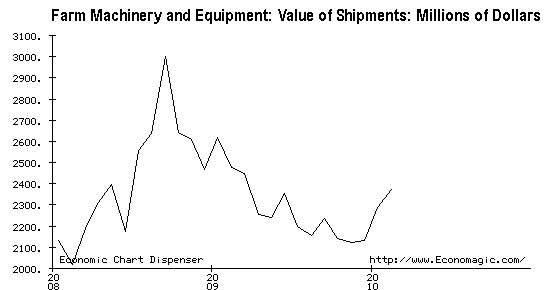
Part of the reason why domestic wire rod pricing has not met much resistance to raw material hikes is because even though overall demand in the steel industry is sluggish, demand in some smaller niche markets is enjoying decent activity. The agricultural sector is one of them-regardless of the economic climate, people still have to eat. Farm machinery and equipment, which are manufactured amongst others with wire rod, have not been immune to the recession, but shipment levels have rebounded faster than many other steel products. Despite many steel industry predictions of a gloomy 2010, there is still an underlying need for steel products that will carry the industry through.