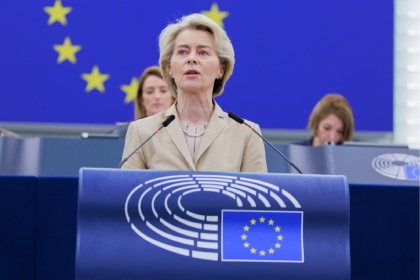
European Commission President Ursula von der Leyen has defended the EU’s Emissions Trading System (ETS), arguing that it demonstrates how decarbonization and industrial competitiveness can progress in parallel.
Speaking at the European Industry Summit in Antwerp on February 11, 2026, she said emissions in sectors covered by the ETS have fallen by 39 percent since the system was introduced in 2005, while economic output in those same sectors has increased by 71 percent.
Carbon revenues to be reinvested in industrial transformation
Since its launch, the ETS has generated more than €260 billion in revenues. At the EU level, these funds have been channeled into industrial innovation and decarbonization initiatives.
A key instrument is the €100 billion Industrial Decarbonisation Bank, designed to support large-scale transformation projects. The first pilot auction under the scheme, valued at €1 billion, is expected to conclude soon and will finance projects such as low carbon furnaces and advanced metal processing.
Member states urged to allocate more ETS revenues to industry
Von der Leyen noted that EU member states currently direct less than five percent of their ETS revenues toward industrial decarbonization. She said this share needs to increase and indicated that the issue will be raised with national leaders.
Boosting the proportion of ETS revenues reinvested into industry is expected to become a central element of the upcoming ETS reform scheduled for later this summer. According to the Commission president, since the revenues originate from industrial sectors, they should be used to support those same industries in their low-carbon transition while preserving competitiveness.