According to the International Energy Agency (IEA), global coal demand has reached a plateau and is likely to decline slightly by 2030 as competition from renewables, natural gas and nuclear power intensifies, despite short-term variations across key markets.
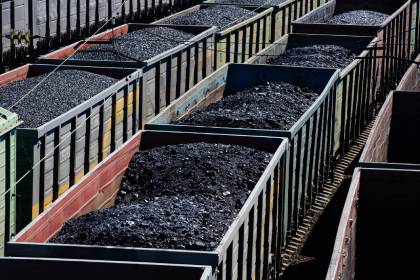
Global coal demand outlook to 2030
The IEA stated that in its latest annual market assessment, Coal 2025, global coal demand is forecast to edge down through the end of the decade, returning by 2030 to the same level recorded in 2023. The report provides global and regional forecasts for coal demand, supply and trade through 2030, while also examining trends in investment, costs and pricing.
According to the IEA, global coal demand is expected to increase by 0.5 percent in 2025, reaching a new record of 8.85 billion mt. However, consumption patterns in several major markets diverged from recent historical trends.
Diverging regional trends in 2025
The IEA reported that coal demand developments in 2025 varied significantly by region. In India, an early and intense monsoon season led to a decline in annual coal use. In the United States, higher natural gas prices and policy measures that slowed coal-fired power plant retirements resulted in higher coal consumption, reversing a 15-year downward trend. In the European Union, coal demand declined only modestly after two consecutive years of double-digit falls. Meanwhile, in China, coal consumption remained broadly unchanged compared to 2024 levels.
Power sector to drive long-term decline
The IEA emphasized that shifts in the power sector, which currently accounts for around two-thirds of global coal consumption, will be the main driver of the expected downturn. With renewable capacity expanding rapidly, nuclear power growing steadily, and a significant wave of liquefied natural gas supply entering the market, coal-fired power generation is forecast to decline from 2026 onward. By contrast, the IEA noted that coal demand from industrial applications is expected to show greater resilience over the outlook period.
China remains decisive for global coal markets
According to the IEA, China, which accounts for more than half of global coal consumption, is expected to see a slight decline in demand by the end of the decade. The country continues to deploy renewable energy capacity at a rapid pace, with government policy targeting a peak in domestic coal consumption by 2030.
Commenting on the outlook, Keisuke Sadamori, Director of Energy Markets and Security at the IEA, stated that despite unusual developments in several major markets in 2025, the agency’s medium-term forecast remains broadly unchanged, with global coal demand expected to plateau before edging lower by 2030. He added that economic growth, policy decisions, energy market dynamics and weather conditions in China will continue to have a disproportionate impact on global coal trends.
India and Southeast Asia to lead demand growth
The IEA reported that the largest absolute increase in coal demand through 2030 is expected in India, where consumption is forecast to grow by an average of 3 percent per year, resulting in an overall increase of more than 200 million mt. Southeast Asia is projected to record the fastest growth rate, with coal demand rising by over 4 percent annually during the same period.
At the same time, the report highlighted several uncertainties that could alter the outlook. Faster-than-expected electricity demand growth in China, slower integration of renewables, or increased investment in coal gasification could push global coal demand above current forecasts.
Trade, metallurgical coal and production outlook
According to the IEA, China’s strong coal imports in recent years have supported global trade, offsetting declining imports from the European Union, Japan, Korea and other markets. However, China reduced coal imports in 2025 due to oversupply and weak demand, a trend that is expected to persist through 2030, leading to a contraction in global coal trade.
The IEA noted that metallurgical coal has relatively stronger prospects, reflecting India’s continued reliance on imports to support its expanding steel industry.
Amid subdued demand prospects, high stock levels and lower prices, which are compressing profit margins, the IEA expects coal output to decline in most major producing countries by 2030. This includes China, as domestic demand weakens, and Indonesia, which is expected to be affected by softer trade flows. India stands out as an exception, with coal production forecast to rise as the government seeks to reduce import dependence.