Vietnam-based steel producer Hoa Phat Group has officially broken ground on its Hoa Phat Dung Quat Rail and Special Steel Production Plant, marking a major step in the group’s strategy to expand into high-tech and value-added steel products.
The project is designed to supply high-speed railway rails and special steels for major rail infrastructure developments, with the first products targeted for market launch in 2027.
The rail and special steel plant will contribute to state budget revenues, stimulate local industrial and service growth, reduce reliance on steel imports, and support Vietnam’s expanding transport infrastructure.
Plant location, capacity and investment
The facility is located in the Eastern Industrial Park of the Dung Quat Economic Zone in Quang Ngai province and will be developed on an area of nearly 15 hectares. It has a designed production capacity of 700,000 mt per year and represents a total investment exceeding VND 10 trillion ($379.75 million).
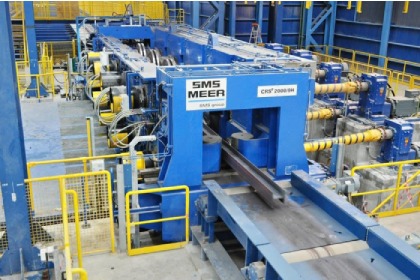
The plant will be equipped with state-of-the-art production lines supplied by Germany-based SMS Group and UK-based Primetals Technologies, enabling consistent product quality that meets international high-speed rail standards.
Product range and regional positioning
The plant’s product portfolio will include high-speed rail rails, urban railway rails, crane rails, and a wide range of special steel profiles, such as U-, I-, H- and V-shaped sections.
Hoa Phat expects to become the first and only producer in Southeast Asia capable of manufacturing high-speed railway rails.
Quality control and international standards
By refining steel directly from low-impurity iron ore, Hoa Phat will be able to produce rails with lengths of up to 100 meters, featuring high straightness, flatness and rigidity.
Advanced laser and ultrasonic inspection systems will be used to control rail geometry and detect internal defects, ensuring strict quality assurance before market release. The rails are designed to comply with leading international standards, including EN 3674 (Europe), JIS E1120 (Japan) and TB/T 2344 (China).
The project has already completed land clearance and all required legal procedures. Construction commenced immediately after the groundbreaking ceremony, with equipment installation scheduled for mid-2026 and first rail production targeted for 2027, one year earlier than originally planned in the approved investment roadmap.