The International Monetary Fund (IMF) has announced that it has maintained its global economic growth forecast at 3.3 percent, citing greater resilience than previously expected despite US-led trade disruptions and elevated uncertainty.
According to the IMF’s latest outlook, global growth is slightly higher than earlier estimates and broadly unchanged from last year. The stability reflects stronger-than-expected economic performance in the US and China, supported by easing trade frictions, fiscal stimulus, favorable financial conditions and improved policy frameworks across several emerging economies.
It should be noted that the forecast was finalized before recent geopolitical developments, including the US seizure of Venezuela’s president, political unrest in Iran and renewed US tariff threats linked to the Greenland dispute.
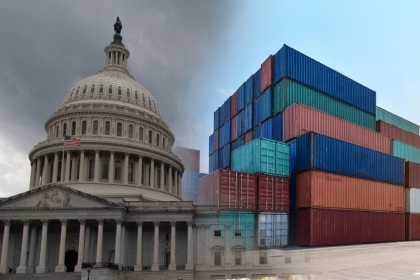
AI investment supports activity as manufacturing lags
A key driver of global resilience has been the surge in information technology investment, particularly in artificial intelligence.
While global manufacturing activity remains weak, IT investment in the US has reached its highest share of economic output since 2001. This has supported broader business activity and generated spillover effects for global technology exporters, especially in Asia.
Rising equity prices and strong corporate earnings have underpinned this expansion, although increased reliance on debt financing has led to higher leverage and growing financial risks.
Financial vulnerabilities remain elevated
Despite stronger earnings and more moderate overvaluation compared with previous cycles, the IMF warned that structural vulnerabilities remain significant.
Stock market gains are increasingly concentrated in AI-related firms, while unlisted companies financed through debt are playing a larger role in investment. In addition, equity market capitalization relative to economic output is now far higher than two decades ago.
The IMF cautioned that even a modest market correction could have a material impact on consumption and growth.
AI presents both upside and downside risks
Looking ahead, the IMF said artificial intelligence could lift productivity and push global output above baseline projections.
However, weaker-than-expected AI profitability or a sharp reassessment of market valuations could tighten financial conditions and slow growth, particularly in technology-heavy regions such as the US and Asia. Given the high degree of global interconnectedness, such a shock would likely spill over to other economies.
Trade tensions and geopolitics weigh on outlook
The IMF highlighted geopolitical tensions, expanding trade and export controls, and limited fiscal space as key downside risks.
Policymakers were urged to maintain strong financial supervision, safeguard central bank independence and remain ready to adjust monetary policy as conditions evolve. Fiscal authorities were encouraged to rebuild buffers, while labor market policies should focus on skills development, mobility and inclusion.
According to media reports, IMF chief economist Pierre-Olivier Gourinchas warned that a renewed cycle of tit-for-tat trade actions would have a clearly adverse impact on global growth, particularly through confidence and market repricing effects, adding that trade tensions and geopolitical are downside risks for the global economy.