The European Union and Indonesia have officially concluded negotiations on a landmark Comprehensive Economic Partnership Agreement (CEPA) and Investment Protection Agreement (IPA). This deal is set to reshape trade between the two economies by eliminating tariffs, securing critical raw materials, and opening new markets for EU exporters.
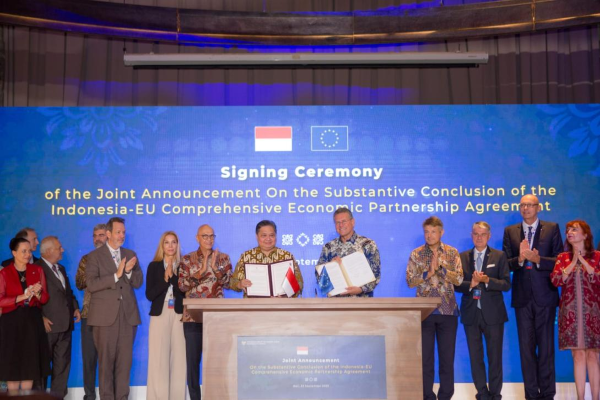
Major milestone in EU trade policy
Following the political agreement reached on July 13 between European Commission President Ursula von der Leyen and Indonesian President Prabowo Subianto, both sides have now finalized the CEPA and IPA. These agreements strengthen the EU’s diversification strategy, securing new export opportunities and more reliable supply chains.
Von der Leyen stated, “Our deal with Indonesia creates new opportunities for businesses and farmers in a major and growing economy. This also provides us with a stable and predictable supply of critical raw materials, essential for Europe’s clean tech and steel industry.”
Benefits for EU exporters and farmers
The CEPA delivers direct advantages across sectors:
- Tariff reductions: import duties will be removed on 98.5 percent of tariff lines.
- Annual savings: EU exporters will save €600 million per year on duties.
- Agriculture: lower tariffs on agri-food products and protection for traditional EU goods.
- Industry: competitive edge for automakers, chemical producers, and machinery suppliers.
Expanded market access for EU businesses
The agreement also grants EU companies privileged access to Indonesia’s rapidly growing economy:
- Ownership rights: full ownership allowed for EU service providers in key sectors such as IT and telecommunications.
- Strategic investment opportunities: new openings in electric vehicles, electronics, and pharmaceuticals.
- Intellectual property protection: stronger safeguards for EU trademarks and measures to combat counterfeit goods.
- Support for SMEs: Dedicated provisions to help smaller businesses protect their brands and expand globally.