The Pilbara Ports Authority has announced that initial inspections at the Port of Dampier have revealed significant infrastructure damage following Tropical Cyclone Narelle, which impacted the region as a category 4 storm.
Although the port was cleared to reopen on March 28, general cargo operations remain temporarily suspended due to damage within the cargo precinct. Access to the port is currently limited to essential personnel.
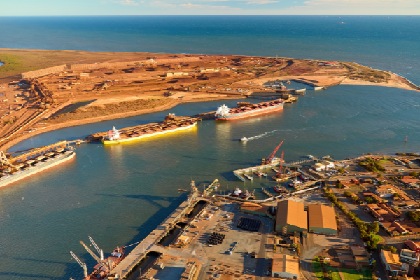
Cargo facilities remain inoperable
Inspections identified substantial damage to key infrastructure, including the Dampier Cargo Wharf and its adjacent floating deck facility, both of which have been rendered inoperable. Damage has also been reported to critical assets such as the deck structure, breakwaters and roll-on/roll-off ramp, caused by strong winds, wave uplift and storm surge.
Further engineering assessments, including underwater inspections and marine surveys, are ongoing to determine when operations can safely resume.
Ashburton port remains closed
Meanwhile, the Port of Ashburton remains closed and will undergo inspections once weather conditions improve.
The port authorities stated that response teams are continuing to assess the full extent of the damage and develop a recovery plan, although challenging sea conditions are currently limiting access for inspection teams.
Rio Tinto resumes iron ore operations
Rio Tinto has confirmed that it has resumed iron ore port operations following the passage of the cyclone. Ship loading operations at East Intercourse Island, Parker Point and Cape Lambert B resumed on March 28, while repair works continue at Cape Lambert A. Operations at this facility are expected to restart in the coming days.
According to Rio Tinto, recent weather disruptions, including Cyclone Narelle and Tropical Cyclone Mitchell in February, have reduced iron ore shipments by approximately 8 million mt. The company has identified measures to recover around half of these volumes in the near term. Despite the disruptions, Rio Tinto has maintained its 2026 Pilbara iron ore shipment guidance at 323-338 million mt.