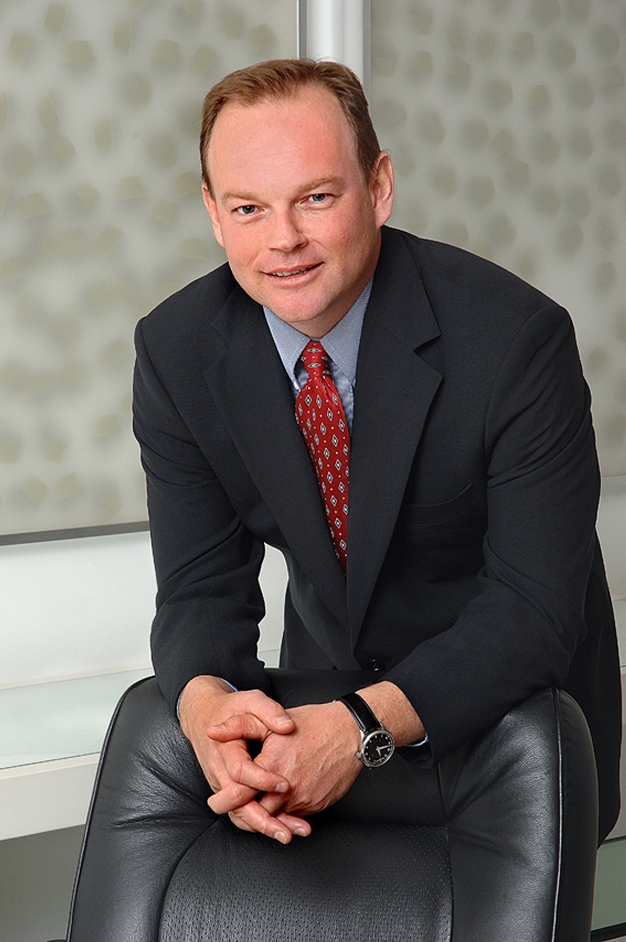
André Gerdau Johannpeter in 2007 became the Chief Executive Officer of Gerdau, one of the biggest steel producers in the world. At the beginning of 2008, Mr. Johannpeter also became a member of the Board of Directors of Gerdau. Gerdau is the largest long steel producer in the Americas and one of the major worldwide suppliers of specialty long steel for the automotive industry. Its industrial presence spans 14 countries, with operations in the Americas, Europe and Asia.
Mr. Johannpeter has around 30 years of experience at Gerdau. Before taking over as CEO, he led in the areas of Marketing and Sales, Metallics, Procurement, Logistics, Human Resources and Organizational Development on a global level. Previously to that he was the Executive Vice President in the Executive Committee and Chief Operating Officer of Gerdau Ameristeel, the North American operation of the company (Canada and the US). André has been participating on the Gerdau Ameristeel Board since 2002.
Currently, Mr. Johannpeter also serves as the President of the Latin American Iron and Steel Institute (ILAFA) and Vice President of the Brazilian Steel Institute.
SteelOrbis recently sat down with the Latin American steel long product leader to get his unique perspective on what's in store for Latin steel and what impact he expects the region have on the global steel market in the coming years.
Give us your overall impression of the steel markets as of the first quarter of 2010. How are the Latin American steel markets coping with the global financial crisis?
It is still too early to anticipate the performance of the steel markets as of the first quarter of this year, but the overall expectation is that the global steel industry recovery continues at different paces around the world, following the economic recoveries of their home countries.
IMF published on January 26 the World Economic Outlook Projections where the expectation for global GDP in 2010 has been improved by +0.8 percent. According to these projections, countries in Latin America such as Brazil and Mexico will follow the same trend, enhancing their perspectives for 2010. The steel markets in Latin America are expected to benefit from these better perspectives, fostered, among other factors, by economic measures to face the economic crisis in the region.
As the chairman of ILAFA (The Latin American Iron and Steel Institute) what influence do you think Latin American steel companies will have in the coming years compared to steelmakers in the other international steel markets?
The expected steel industry growth throughout the region, in response to the government action toward construction and infrastructure investments, gives rise to an important opportunity for local companies to enhance their strength and consolidate their roles as significant global players. Those Latin American companies that embrace these challenges and establish competitive advantage positions will become important consolidators on the global steel scene.
Gerdau's presence spans many markets including the Americas, Asia and Europe. Which region do you see as the strongest for steel consumption at present?
Asia -- essentially through China and India -- has been increasing its importance in the global steel market, especially in 2009 when its steel consumption increased compared to 2008. Nevertheless, even after registering negative growth rates in 2009, the Americas and Europe still remain very important steel markets, accounting for around 11 percent and 13 percent of the global steel demand, respectively.
Tell us about your joint venture in India.
India is a market with a high growth potential, and it is extremely important in Gerdau's international growth strategy. Considering 2009 figures, India is currently the world's fifth-largest steel producer. Gerdau foresees investments of nearly R$ 88 million (US$47 million) for its Kalyani Gerdau's joint venture during 2010, specifically for a new rolling mill for the production of rebar and specialty steel. The rolling mill will have a capacity of 300,000 mt and is expected to start production in 2011. With this investment, Gerdau strengthens its position in the Asian market, supplying the construction and automotive steel sectors.
Gerdau announced last year that it would restart the Várzea de Lopes (MG) mine. Is Gerdau reaching self-sufficiency as regards iron ore? If not, is raw material self-sufficiency a goal of the company?
Varzea de Lopes mine restarted to operate last November and it has an iron ore production capacity of 1.5 million mt per year. This volume, together with the Miguel Burnier mine production, will allow Gerdau to produce 2.7 million mt per year. Gerdau is not self-sufficient in iron ore production, but the volume produced in its units is entirely destined to supply its internal needs.
What is Gerdau's current investment plan for Brazil in the coming years?
R$9.5 billion (US$5.1 billion) will be invested in the next five years (2010-2014), approximately 80 percent of which will be in Brazil.
Gerdau will install a heavy plate mill unit at Ouro Branco (Brazil), an investment estimated at R$1.75 billion (US$938.8 million). The equipment will have an installed capacity of one million mt per year, with possible future expansions. It is scheduled to start production by the end of 2012. The installation work should begin in 2010, and, at its peak, it should generate 4,000 temporary jobs. In addition, 420 new permanent jobs should be created to operate the new equipment. The main focus of this investment is to attend the Brazilian market, especially the oil sector, followed by the shipbuilding industry, the civil construction industry (metallic construction) and heavy equipment sector (machines and tools). Surplus production will exported to other countries in Latin America.
The structural sections rolling mill expansion at Ouro Branco unit is also being resumed, a R$100 million (US$53.6 million) investment that should increase its annual production capacity from 540,000 mt to 700,000 mt by 2011. Increased production of structural sections are aimed mainly to supply works for the FIFA World Cup 2014 and the 2016 Olympic Games, as well as demands to be generated by the pre-salt exploration.
Gerdau is primarily known for its long products. Do you expect the company to expand to flat rolled products within the next five years?
Yes, the investment in the heavy plate rolling mill at Ouro Branco reflects our commitment to expand our participation in the flat rolled products segment.
How do you think mergers and acquisition activity will evolve in the Americas region?
There is the potential for developing important domestic markets in regions where Gerdau already operates, such as Latin America (especially Brazil) and Asia. At this point the company's priority is to maximize productivity of its current assets. The company's focus, therefore, is not M&A.
Finally, it seems that one of the markets that has a bleaker outlook is the North American longs market. This is a major market that Gerdau participates in. How do you see the demand recovery prospect for long products in North America?
The prospects are for a gradual economic recovery in the region. The overall expectation is that the US' stimulus plans should start to show positive results from the second half of 2010-on. There is a latent need for infrastructure renewal across North America and we are confident that Gerdau Ameristeel will be able to capture opportunities that will emerge in the market.